
“Carbon Capture 101: Solving the Climate Crisis with Revolutionary Technologies”
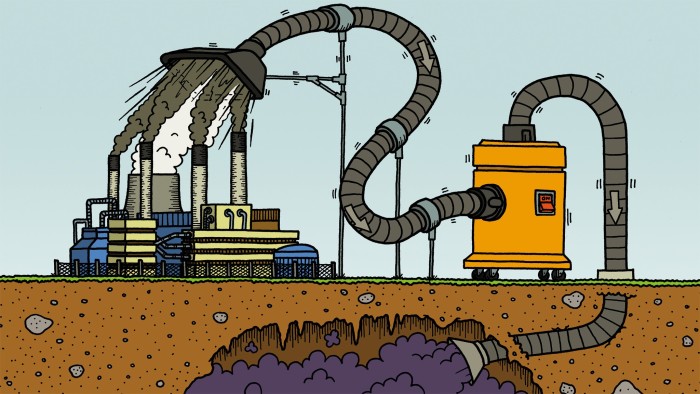
Image Source: Google
In recent years, the world has become increasingly aware of the urgent need to address the climate crisis. Carbon dioxide (CO2) emissions, primarily from burning fossil fuels, have been identified as one of the main contributors to global warming and climate change. To reduce our carbon footprint and mitigate the effects of climate change, it is crucial to develop revolutionary technologies that can capture and store carbon emissions.
What is Carbon Capture?
The carbon capture process, also known as carbon capture and storage (CCS), is a process that involves capturing CO2 emissions from industrial processes, such as power plants and factories before they are released into the atmosphere. The captured CO2 is then transported and stored underground, typically in depleted oil and gas reservoirs or deep saline aquifers, where it is permanently stored.
There are three main methods of carbon capture: post-combustion capture, pre-combustion capture, and oxy-combustion. Post-combustion capture involves capturing CO2 from flue gases after the fuel has been burned. Pre-combustion capture involves capturing CO2 before the fuel is burned, usually by converting it into a gas or a liquid. Oxy-combustion involves burning fuel in pure oxygen instead of air, which results in a flue gas that is mostly CO2.
Revolutionary Carbon Capture Technologies
Several revolutionary carbon capture technologies are currently being developed and tested. One promising technology is direct air capture (DAC), which involves capturing CO2 directly from the ambient air. Traditional carbon capture methods are typically used in industrial settings, but DAC has the potential to capture carbon emissions from any source, including transportation and agriculture.
Another revolutionary technology is carbon capture and utilization (CCU), which involves capturing CO2 emissions and transforming them into valuable products. For example, captured CO2 can be used to produce fuels, chemicals, and building materials. CCU not only helps to reduce carbon emissions but also creates economic opportunities by turning CO2 into a valuable resource.
Furthermore, researchers are exploring the potential of carbon capture and storage (CCS) in natural ecosystems. For instance, scientists are studying the effectiveness of capturing CO2 from the air and injecting it into the ground to enhance the growth of plants and trees. This approach, known as enhanced carbon sequestration, could help to store large amounts of carbon in the soil and vegetation.
The Role of Carbon Capture in Solving the Climate Crisis
Carbon capture technologies have the potential to play a crucial role in solving the climate crisis. By capturing and storing CO2 emissions, we can significantly reduce the amount of greenhouse gases released into the atmosphere. This can help to slow down the rate of global warming and mitigate the effects of climate change.
In addition, carbon capture technologies can provide a bridge to a low-carbon future by allowing us to continue using fossil fuels while reducing their environmental impact. This is particularly important in sectors such as energy and industry, where finding alternative renewable energy sources may still be a challenge.
However, it is important to note that carbon capture alone is not a silver bullet solution. It should be seen as part of a broader strategy that includes transitioning to renewable energy sources, improving energy efficiency, and adopting sustainable practices. These efforts, combined with carbon capture technologies, can help us achieve the necessary emissions reductions to meet the goals of the Paris Agreement and combat climate change effectively.
In conclusion
Carbon capture technologies offer a promising solution to the climate crisis by capturing and storing CO2 emissions. Revolutionary technologies like direct air capture and carbon capture and utilization have the potential to revolutionize the way we address carbon emissions and create a more sustainable future. However, it is essential to continue investing in research and development to improve the efficiency and scalability of these technologies.